
Planning (Permission in Principle Stage 1)
You'll be asked to sign in to register interest.
Self-build action plan · Stroud Lpa
Stroud is one of the more genuinely interesting places in England to self-build. Five steep valleys converge on a market town with a long architectural memory: Architype's Springhill, the UK's first cohousing community, sits a short walk from the centre. The district mixes the Cotswolds AONB to the east with the Severn Vale to the west, which means a careful patchwork of constrained and less constrained land — sometimes within the same parish.
Right now is also an unusually favourable moment for self-builders. Stroud District Council's 2015 Local Plan is out of date, the proposed Local Plan Review was withdrawn after being found unsound in April 2025, and the council can currently demonstrate only around 3.24 years of deliverable housing land supply against the five-year requirement. That triggers the tilted balance under paragraph 11(d) of the NPPF — meaning small, deliverable sites are easier to bring forward in Stroud than they would be in an authority with an up-to-date plan.
On this page: live plots in the district, the local self-build register's standing, architects with experience here, what to expect from Stroud planning, and a quick FAQ for the questions self-builders most often ask.
The planning position in Stroud District matters more than usual right now, and it's worth understanding before you commit time or money to a plot.
Stroud District Council adopted its current Local Plan in November 2015 and it remains the day-to-day basis for planning decisions. But the plan was due for review and that review process collapsed: on 9 April 2025 the Inspectors found the proposed Local Plan Review unsound and asked that it be withdrawn, citing concerns about the strategic road network and the council's reliance on a small number of very large housing sites. Stroud now has to begin a new Local Plan Review essentially from scratch.
Following the December 2024 changes to the NPPF, Stroud cannot currently demonstrate a five-year supply of deliverable housing land. A November 2025 appeal decision confirmed the supply at approximately 3.24 years. Where a council cannot show a five-year supply, paragraph 11(d) of the NPPF engages - the "tilted balance" - meaning planning permission should be granted for sustainable development unless the harms significantly and demonstrably outweigh the benefits.
Smaller, deliverable sites — exactly the kind a self-builder is interested in - are materially easier to bring forward in Stroud right now than they would be in an authority with an up-to-date plan. The Inspectors' criticism of reliance on large allocations strengthens this further. None of which makes permission automatic, but it does change the balance of probability on a well-prepared application.
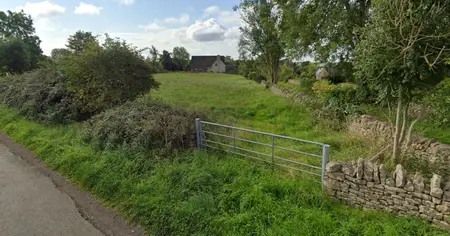
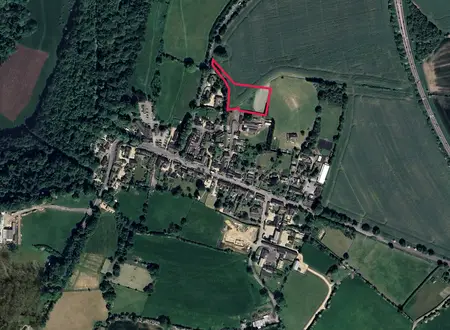
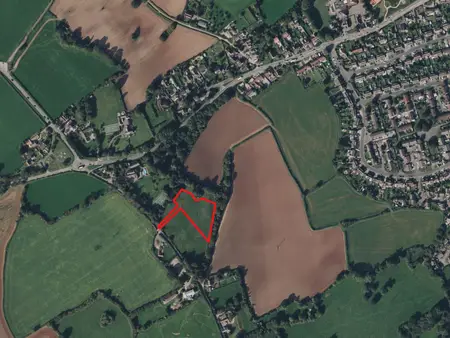
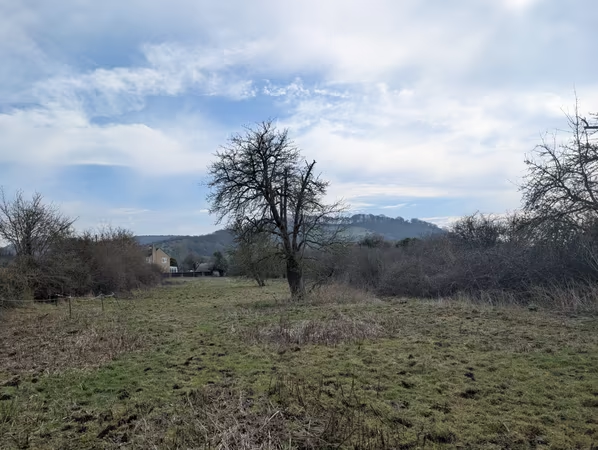
Plots people are working to bring forward right now — within 20 miles of the Stroud Lpa boundary. Register your interest to add weight to each one.
You'll be asked to sign in to register interest.
You'll be asked to sign in to register interest.
You'll be asked to sign in to register interest.
You'll be asked to sign in to register interest.
You'll be asked to sign in to register interest.
Join others in Stroud Lpa working to unlock more self-build opportunities
Know of a plot or land opportunity? Help others find it by adding it to the map.
Register your interest to receive updates when new self-build opportunities become available in this area.
You'll be asked to sign in to register interest.
Plots in Stroud District vary sharply with location. The Five Valleys - Slad, Painswick, Toadsmoor, Chalford, Nailsworth - tend to produce sloping, southerly-facing sites with stone walls and orchard remnants; great architecture is possible but the topography demands careful design and budget contingency. Severn Vale plots, to the west, are flatter and more agricultural in feel, often with better access and lower build complexity.
AONB designation covers much of the eastern half of the district and significantly affects what's allowed: sympathetic materials, careful massing. The western and northern parts of the district are largely outside the AONB and offer more flexibility.
Sloping, southerly-facing sites with stone walls and orchard remnants. Topography demands careful design and budget contingency. Mostly within the Cotswolds AONB.
Flatter, more agricultural in feel. Better access, lower build complexity. Largely outside the AONB.
AONB designation drives sympathetic materials and careful massing.
Small, concrete actions that compound. Each one helps build the case for self-build in Stroud Lpa.
Joining the register records real demand for self-build in Stroud Lpa. Councils are obliged to grant enough permissions for serviced plots to meet that demand — every registration counts.
Get notified when new plots come up in Stroud Lpa — and signal to landowners and the council that these plots matter, helping build momentum.
The creation of plots always starts with landowners. Small landowners are often the easiest to work with. Reach out to your network and get talking.
The Stroud palette is shaped by two distinct geological zones. East of the M5, the Cotswolds AONB pushes towards honey-coloured oolitic limestone, stone slate roofs, and lime-rendered finishes — historically quarried from Painswick and the Forest of Dean. West towards the Severn, brick and clay tile reassert themselves, with timber framing and weatherboarding common in the agricultural fringe. A successful self-build in either zone tends to read as a careful response to its specific village's prevailing materials, rather than a generic Cotswolds homage. Contemporary insertions can use standing-seam zinc or Corten provided the massing is restrained and the supporting walls reference the local stone or render tradition.
Locally quarried oolitic limestone, used as random rubble walling with ashlar dressings around openings. Honey to grey tones depending on exact source. The default external material across the AONB.
Stonesfield slate or Forest of Dean stone slate, laid in diminishing courses. Heavy, expensive, and the AONB benchmark for prominent roofs. Reclaimed or simulated alternatives accepted in some contexts.
Off-white to soft earthy tones over stone or block. Period-appropriate and breathable; commonly used on cottages where exposed stone would be inconsistent with the historic finish.
Local oak used for exposed structural frames or board-on-board cladding, particularly on agricultural barn conversions and Severn Vale infill. Silvers gracefully and reads as appropriate to the working landscape.
Permitted on contemporary roofs and feature walls where massing is modest and the supporting context is otherwise traditional. Springhill and Architype-influenced schemes use it well.
More common at the western edges of the district, towards the Severn Vale. Red clay pantile roofs and red-orange brick walls reflect the agricultural rather than Cotswold tradition.
A Stroud answer to a self-build site tends to fall into one of two camps. The traditional camp draws from the surviving Cotswold cottage, the mill-worker terrace of the Five Valleys, and the rendered Severn Vale farmhouse — proportions, openings, and material choices that read as continuous with what's already there. The contemporary vernacular camp, established locally by Architype's Springhill and continued by practices like Millar + Howard Workshop, treats those same constraints as an underlying logic rather than a literal style: timber-framed, fabric-first, generously glazed where orientation rewards it, but always anchored in stone, render, or weatherboarding rather than glass curtain walls. Either approach can succeed; what doesn't succeed is a generic suburban template dropped onto a Cotswold lane.
Steeply pitched stone slate roof, mullioned windows, drystone garden walls, narrow plan depth. The default reference for AONB villages. Best when proportions and openings stay close to the historic precedent rather than enlarging fashionably.
Two-up two-down terraced cottages stepping down the Five Valleys, originally housing cloth-mill workers. Repeatable rhythm of openings, modest plot widths, party walls as a design constraint rather than a problem.
Rendered walls under hipped clay-tile roofs, brick chimneys, sash windows. Larger, more agricultural in feel than the Cotswold cottage. Suited to the flatter western parishes.
Towns and villages in the district. Each has its own character — and its own opportunities for self-build.
A picturesque hilltop market town and civil parish famous for its expansive common land, Minchinhampton Common, grazed by cattle through summer. Noted for its historic market square, old wool trade origins and medieval church.
Referred to as ‘The Queen of the Cotswolds’, Painswick is known for its beautiful stone buildings, narrow streets, and wool trade heritage. Its churchyard is famous for its 99 yew trees.
Once a centre for the woollen industry, Nailsworth is now a lively town known for its independent shops, cafes, and weekly farmers' market. It is nestled in a deep valley surrounded by wooded hills.
A classic Cotswold village with a long history, Bisley is notable for its spring water wells, stone cottages, and traditional Maypole celebrations.
A small hilltop village overlooking the Nailsworth Valley, Amberley is popular for walking, with immediate access to Minchinhampton Common and mediaeval history.
Rural village known for its Iron Age hill fort (Uley Bury), B&Bs, and community events. The area is rich in prehistoric and Roman archaeology.
A large village with a historic parish church and strong connections to the cloth industry. The nearby village of Leonard Stanley is sometimes grouped with it.
Steeply graded village, once known for its handloom weaving, now famous for its canal, walking paths, and arts community.
A sizeable village, technically a small town, closely linked to nearby Dursley. It has a history in milling and is a local service centre.
Village standing above Stroud with panoramic views, known for the Randwick Wap, a unique annual festival.
6 practices based within 20 miles of the Stroud Lpa boundary.
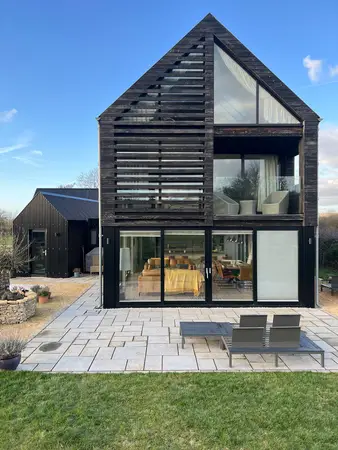
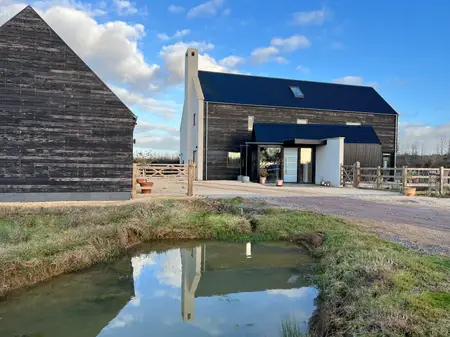
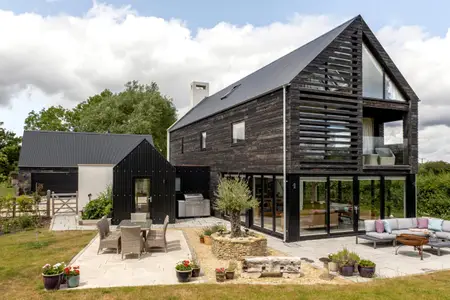
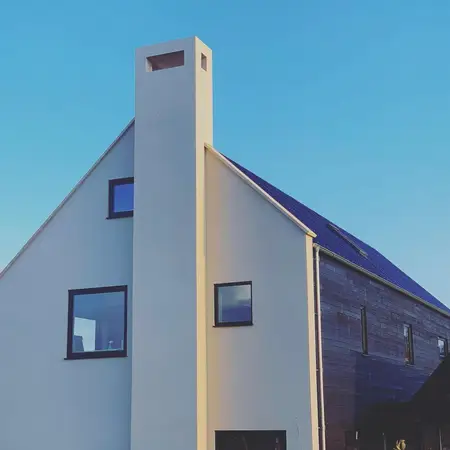
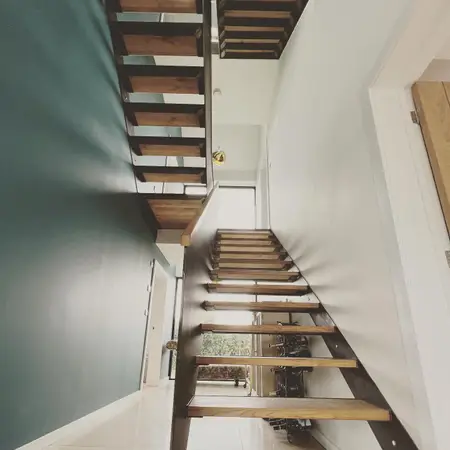
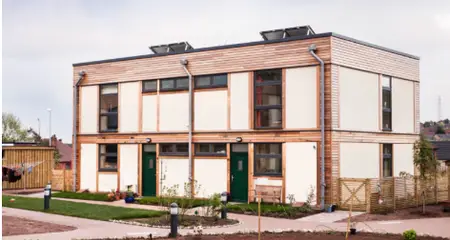
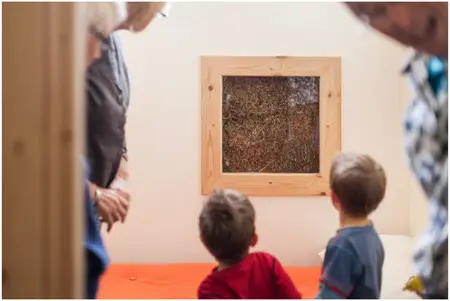
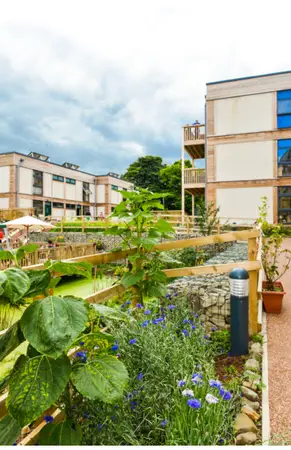
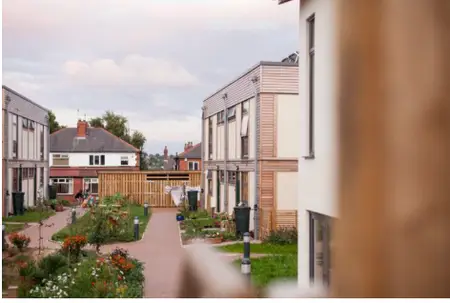
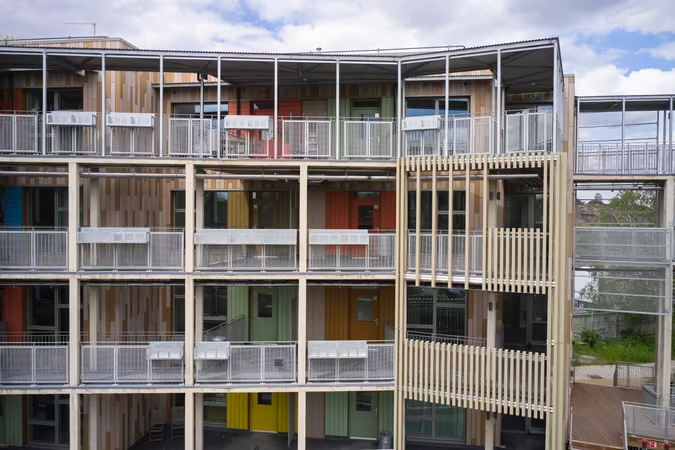
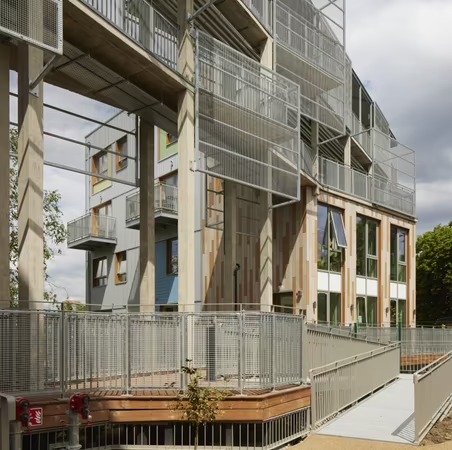
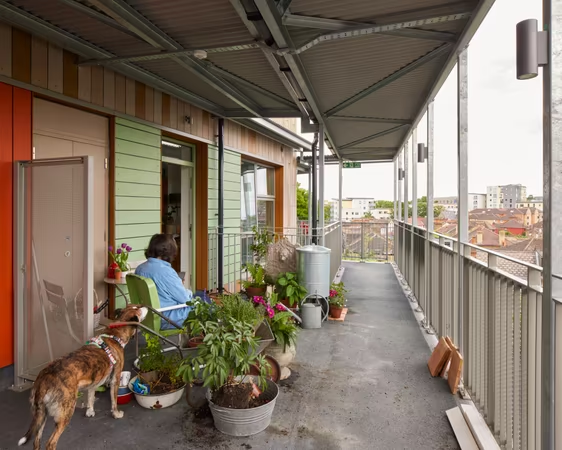
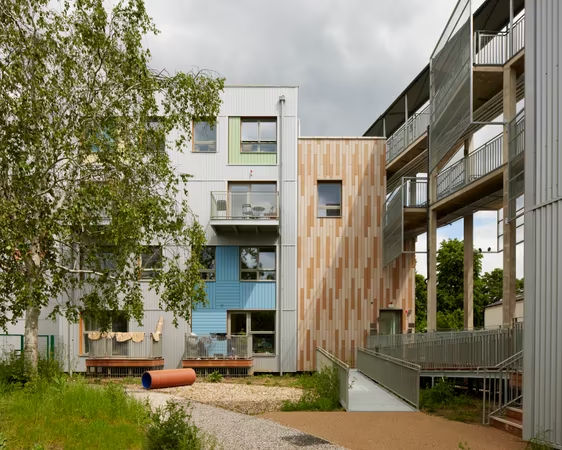
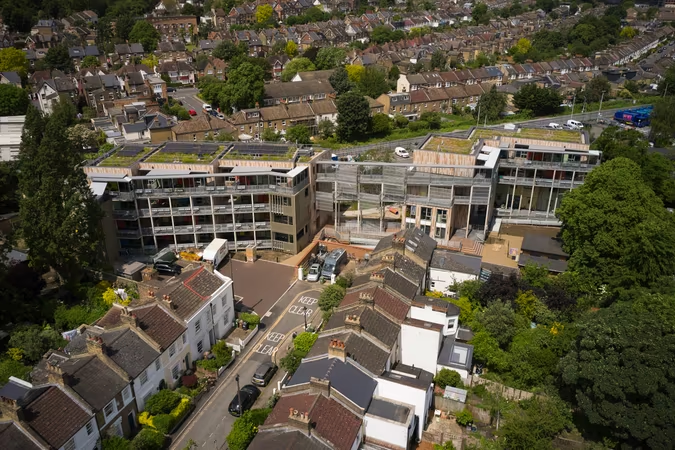
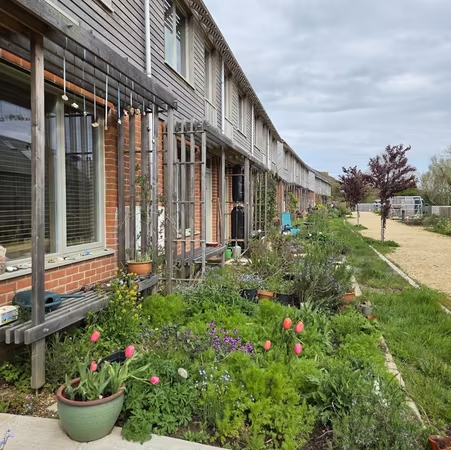
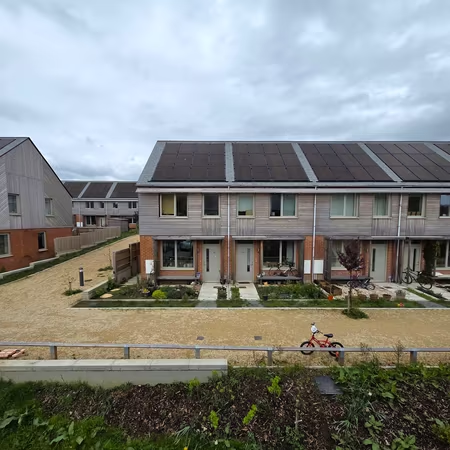
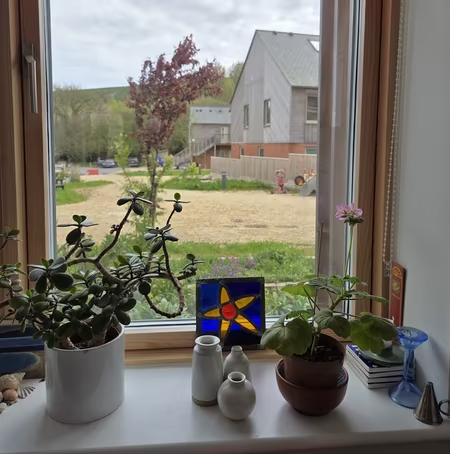
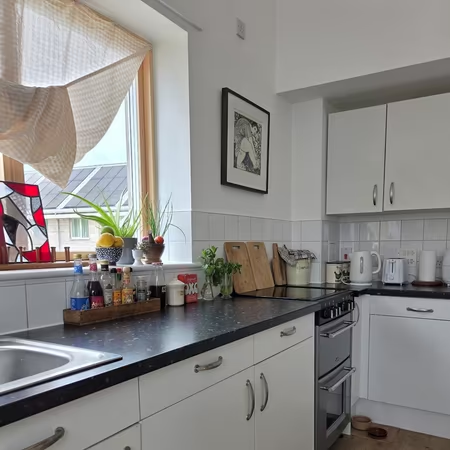
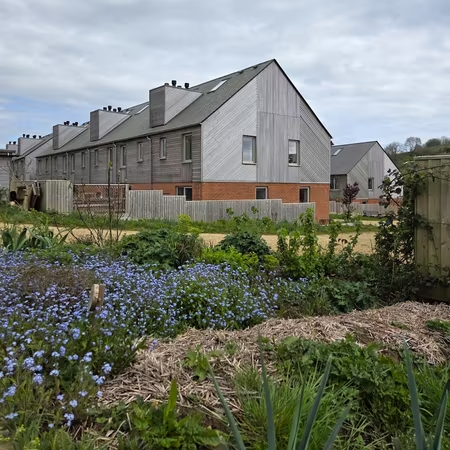
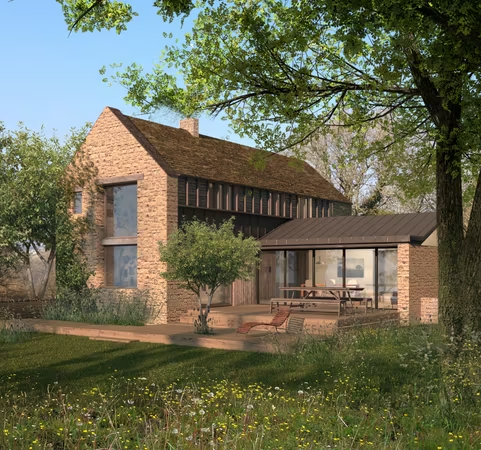
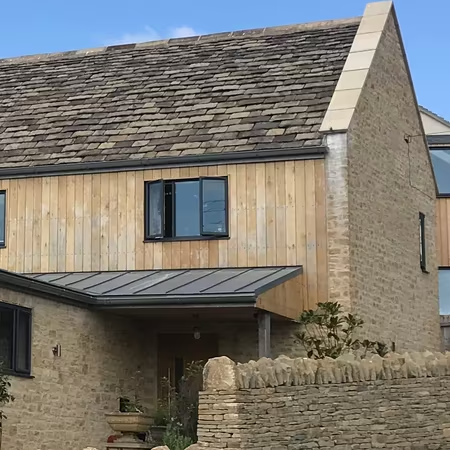
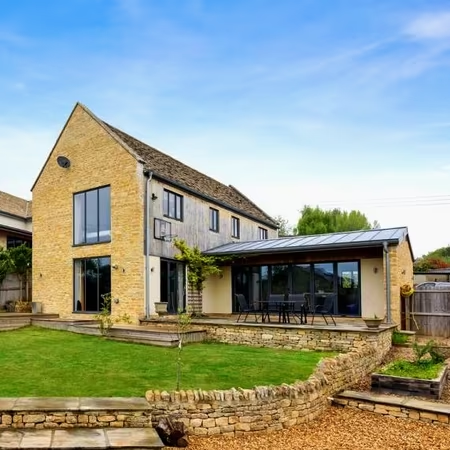
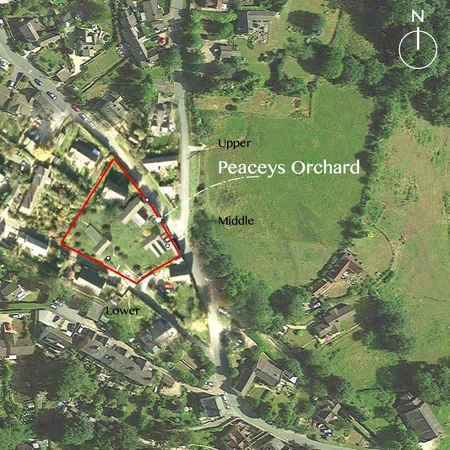
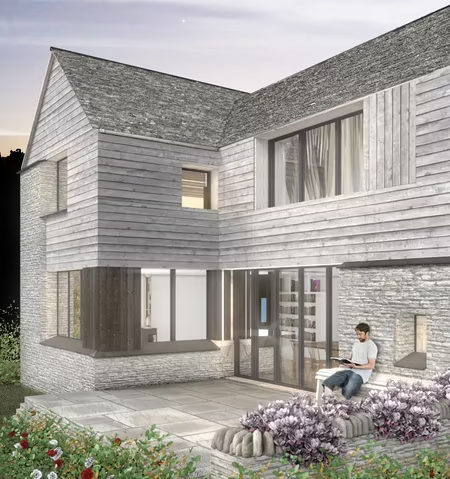
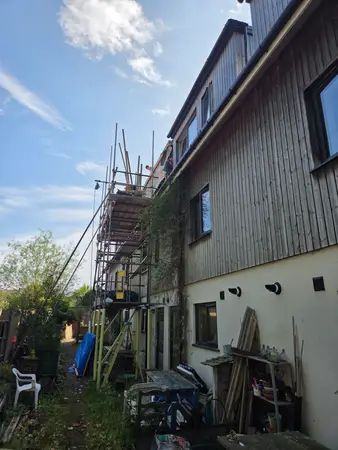
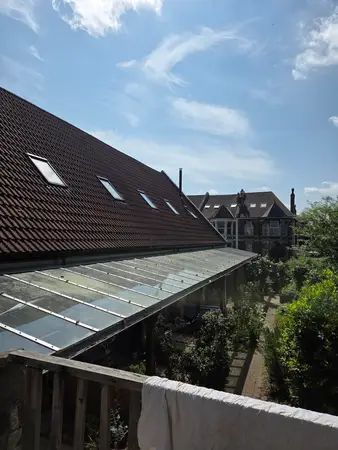
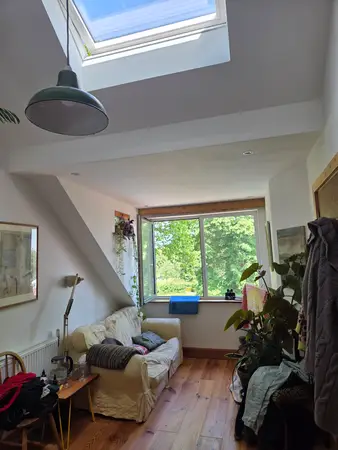
Upload a self-build project in Stroud Lpa to be featured here.
Submit a project →Three routes work in combination. Live plots are listed on this page (currently in Oakridge Lynch and Windsoredge). The Stroud District self-build register, which any prospective self-builder should join, signals demand to the council and identifies you as a candidate when allocations come forward. And direct landowner outreach — particularly to owners of small parcels of unconstrained land in the Severn Vale or settlement infill in the Five Valleys — turns up plots that never reach the open market.
Detailed pricing guidance and a build-cost calculator for self-build schemes nationally.
How the two-stage PIP route works, useful for any Stroud plot pursuing PIP.
We'll review a specific Stroud plot and tell you what's likely possible.